THE STORY BEHIND
Brave Talks is a space for the conversations we tend to avoid.
Created by Réka & Loredana

01
The idea began for me with Travellers Through Grief, the personal journal I created after Csabi died, and later developed into Grief Talks.
As I listened to more people's stories, I realised that the conversation could not stop at grief. There are so many subjects that deserve the same openness, curiosity and human connection.
That is where Brave Talks begins.
It is not a traditional conference or panel series. We want to create spaces where a film, a personal story, an expert perspective or a lived experience becomes the starting point for a real conversation — one where everyone in the room has a part to play.

02
Who are the conversations for?
For everyone. Brave Talks is not meant for one particular kind of person. We want to bring together people of different ages, backgrounds, cultures, professions, beliefs and life experiences. You don't need to be an expert. You don't need to have lived through the subject personally. You don't even need to agree with everyone in the room. You simply need to be willing to listen, stay curious and participate respectfully. Sometimes the most interesting conversations happen between people who would never normally find themselves in the same room. That is the kind of space we want to create.
03
How does a Brave Talk work?
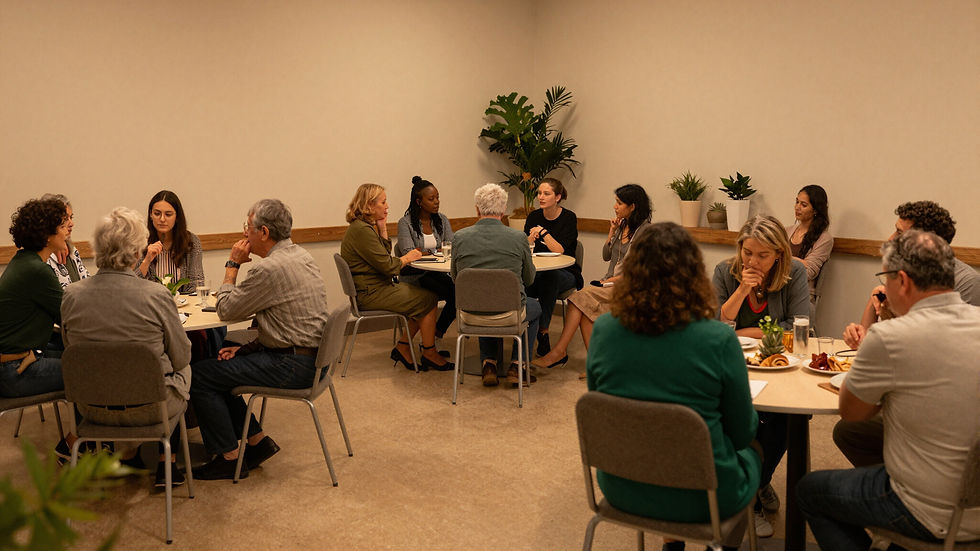
Every Brave Talk is different, but the intention is always the same: bring people together around a subject that matters and create the conditions for a genuine conversation. A film, personal story, presentation, interview or lived experience might open the evening. From there, the conversation begins. Depending on the subject, this might take the form of a panel, audience questions, small-group conversations, or simply the opportunity to stay and talk informally afterwards. There is no fixed formula. The format should serve the conversation, not the other way around.

Some conversations may help us recognise ourselves in someone very different from us.
04
What makes a topic "Brave"?
A Brave Talk doesn't have to be about something tragic or difficult. The question is not whether a subject sounds serious enough. The question is whether it is something we could talk about more openly. Death and grief are a natural starting point for us because they are so deeply connected to how we live. But Brave Talks can move into many different areas: relationships, addiction, codependency, loneliness, belonging, identity, family, culture, mental health, sexuality, loss, parenting, ageing, and the many other subjects that shape our lives. Some conversations may make us uncomfortable. Some may challenge what we have always believed. Some may help us recognise ourselves in someone very different from us. That is part of the point. We are not here to tell people what to think. We are creating opportunities to think, listen and talk.
05
The first Brave Talk
Our first Brave Talk grew naturally from my own journey and from the conversations that began through Travellers Through Grief and Grief Talks.
Death, Culture & Belonging: Community Conversations Through Film uses The Farewell as a starting point for a much wider conversation about death, family, culture and the different ways communities understand and experience loss.
The film gives us a story. The conversation allows us to look beyond it.
What does death mean in different cultures?
What happens when family traditions and individual choices collide?
How do we decide what a “good death” looks like?
What do we owe one another when someone is dying?
And what does belonging mean when we navigate deeply personal moments through cultural expectations?
We don't expect simple answers. We think these are questions worth asking.

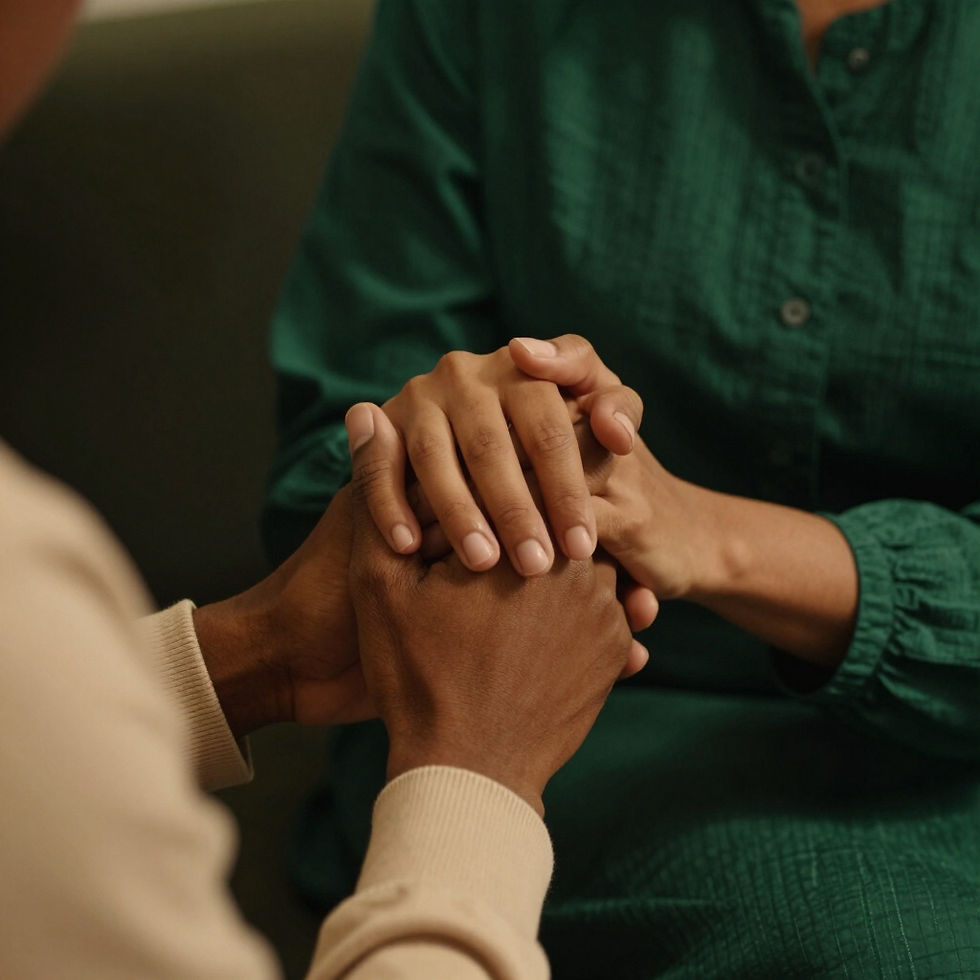
The role of stories
06
Stories will always be at the centre of Brave Talks. Facts matter. Research matters. Experts matter. But we also understand some things differently when we hear them through another person's experience.
That is why we want to bring different perspectives into the room. A researcher may offer evidence and context. A psychologist may help us understand a subject through research and clinical experience. A doctor may explain the medical perspective. And someone who has lived through the experience may tell us something none of those perspectives can fully replace.
We want to make room for all of them.
A story can help us understand what it feels like to be one of them.
07
What happens after the event?
We don't want the conversation to end when the lights come back on. Some people may want to continue talking. Some may want to meet others. Some may simply leave with something they heard that stays with them on the way home. And sometimes, a conversation may lead somewhere else entirely.
The initiative will evolve with the people who become part of it. We are not interested in building a community that simply consumes events. We want people to contribute to what comes next.
08
What Brave Talks is not
Brave Talks is not therapy or a support group. While our evenings may hold deep meaning for those facing challenges, we are not here to provide clinical diagnoses or solve complex personal struggles in a single session. This is not a debate where one person must be proven right, nor is it about being provocative for the sake of it. Most importantly, it is a space where we meet you exactly where you are. There is no expectation for everyone to be at the same stage in their journey, and there is never any pressure to share more than you feel comfortable with. The topics may be brave, but the atmosphere is human. We hope you leave having encountered a new perspective or a lived experience that stays with you. Whether the outcome is a profound realization or just a good conversation over a drink, both are equally valuable.
A future event.
A smaller gathering.
A collaboration.
A new speaker.
A new subject.
A friendship.
09
What we hope to build
Ultimately, Brave Talks is about connection. It began for me with grief because grief taught me something I had not understood before: that human beings need one another, especially when life becomes difficult, and that sometimes the most important thing another person can offer is simply their willingness to stay present.
Csabi (my late partner) understood that instinctively. He could create connection with people he had known for twenty years, but also with a toddler he had met five minutes earlier on a ski slope. That ability to make room for another person, regardless of who they were, is something I want to carry into this work. Brave Talks is therefore not just a series of events. It is an invitation. To come and listen. To come and question. To come and share. To meet people you would not normally meet. To talk about subjects that may not have an obvious place in everyday conversation. And perhaps, occasionally, to discover that the person sitting next to you - someone whose life looks completely different from yours - has experienced something that connects you in a way neither of you expected. We don't know exactly where Brave Talks will go. And perhaps that is part of what makes it exciting. The first conversation will lead to another, and that one may lead somewhere else entirely. What we know is where it began. With a personal story. With grief. With the belief that talking can create connection. And with the simple hope that, by bringing people into the same room and giving them something worth talking about, we can create a little more understanding between us.
Brave Talks. A film. A conversation. A more compassionate community.
Author Reka Peterfi